

Help! I’m wondering if my friend is in a cult. What can I do?
That can feel scary. There are sadly many cults who target uni students around Australia. There’s a lot to be said about the signs of a cult: isolating people from family and friends, authoritarian leadership, controlling every part of a person’s life, all sorts of abuse…
That sounds like a lot. But what can you actually do? The most important thing is to pray. God knows and loves your friend. Pray for God to soften their heart etc
If you ask them about it directly, they’re more likely to shut down and break the relationship with you. So instead, it’s often wiser just to be available, and be a good friend. Your friend may act unusually, may cancel plans, or say unkind things. But so far as you can—keep showing up and showing God’s love to them. If you can plant any seeds of doubt, that’s great, but the most important thing is to be patient with them. By doing this, you’ll contrast the cult environment and create a safe, gentle, non-judgemental space that will hopefully lead to healing and reconnection.
A healthy church needs both right teaching and right living. No church is perfect – they’re all made up of sinful people, after all! Whether you’re looking for encouragement or trying to gauge how your church is going, here are some green flags to look out for:

1. Jesus is front and centre
Okay, you might have expected this one from us – and yet, it’s easy to take it for granted!
People don’t come for the sake of hearing a famous preacher, listening to the best in Christian music (whether contemporary or traditional), or rallying around a political cause – they come to worship Jesus and fellowship together. The church keeps the main thing (Jesus’ life, death, and resurrection) the main thing. Everything else is secondary.
2. The Bible is preached faithfully
More time is spent on the Bible than personal stories or national headlines. Both the Old and New Testaments are preached, and difficult passages aren’t avoided. The church is not ashamed of God’s word but is humbly dependent on it.
3. They’re theologically sound
Many churches list their statement of beliefs online, which is a great way to confirm if they’re aligned with the Bible. The most crucial thing is that we are dependent on Jesus for salvation. Importantly, what is preached and said from the front aligns with this too!
4. Questions are encouraged
A healthy church isn’t afraid of wrestling through hard questions. Instead, they pray and study the Bible to understand more. There are minor points that people disagree on, and that’s okay.
5. People stick around after the service to chat
This is a great sign of a deep community. We’re called to be the family of God and living that out is a beautiful sign of his transforming love! There’s a culture of grace and service, and new people are not just talked to, but warmly welcomed in, and encouraged to grow in their faith.

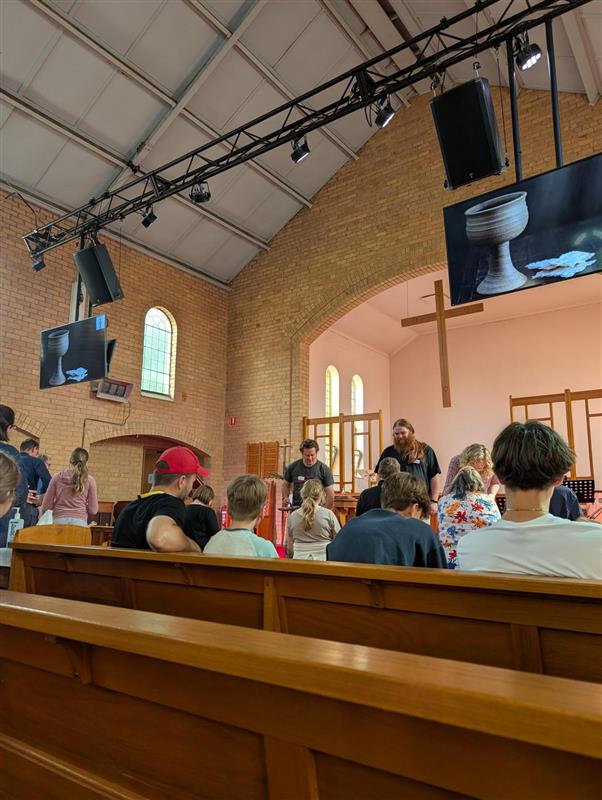
6. Prayer and holiness are a priority – both for leadership and members
Growth in godliness and living faith out practically is both talked about and demonstrated. People gladly show up to prayer meetings, even at awkward times, and regularly ask how to pray for each other.
7. The congregation has people from different cultural backgrounds, ages, and stages of life
What this looks like will depend on where you live, but cultural diversity is a great thing! It’s healthy to have a church that doesn’t look exactly like you.
8. An outward focus
The church is keen to apply God’s word locally and globally through mission partners. Regular people are encouraged to share their faith with friends, family, colleagues, and neighbours.
If you aren’t sure where to start, connect with your local AFES group on campus — they know the area and can point you to churches that will care for your faith and your life as a student.
You’re not in school anymore, and it can feel like starting from ground zero. After years of seeing the same faces, you might suddenly know no one. That’s normal! Whether you’re relieved to start fresh or feeling a bit homesick for the familiar, here are five practical steps to help you make friends, and build friendships that last beyond census date.
1) Get on campus
Deep friendships start with repeated, low-pressure contact. That means showing up—physically. If your subject offers in-person classes, take them. Wander O-Week stalls, sit in the same spot each lecture, linger after tutes, and say yes to society barbecues even if you don’t know anyone yet. Join a club that fits your interests (or your curiosity): sport, music, debating, games, volunteering—whatever gets you out of your room and into conversations. Keep showing up at places, and you’ll start running into people.
Try this: pick two campus spaces to frequent each week (e.g., the same library floor and the café near your faculty) and be a regular.
2) Take the first step
Most people want to connect—they’re just waiting for someone else to go first. Put down your phone. Smile and make eye contact. Ask, “Mind if I sit here?” Compliment a cool tote bag or sticker. Try simple openers:
- “Hey, I’m [Name]. What are you studying?”
- “How’d you find the lecture?”
- “Any tips for this unit?”
- Keep your headphones off in class so you look approachable. If small talk stalls, no stress—thank them for the chat and move on. Not every conversation becomes a friendship, but every friendship starts with a conversation.
Pro tip: swap names twice (“I’m Sam.” “I’m Jess.” “Nice to meet you, Jess.”) to help it stick.




3) Be genuinely interested
Once you’ve started a conversation, keep it going by asking questions to learn more about people. Ask open questions like: “What got you into nursing?” “What’s your go-to study snack?” Listen for details you can revisit next time. Share a little about yourself too—honesty invites honesty. If you click, connect on socials and send a quick message later (“Great to meet you today! Want to compare notes after the next tute?”). People can feel when they’re treated as a person, not a project. Listen for details you can revisit next time. Share a little about yourself too—honesty invites honesty. If you click, connect on socials and send a quick message later (“Great to meet you today! Want to compare notes after the next
Conversation topics to get started: classes, part-time work, commutes, hometowns, sport, music, weekend plans—safe topics that lead naturally to deeper stuff.‑time work, commutes, hometowns, sport, music, weekend plans—safe topics that lead naturally to deeper stuff.
4) Remember: relationships take effort
Community comes at an inconvenience. You’ll go out when you might rather stay home, or spend a bit more on PT or petrol, and choose conversation over another hour of doom‑scrolling. There will always be these sacrifices, but it goes both ways. Be the person who follows through: show up when you say you will, send the “Want to grab a coffee before class?” text, and be quick to apologise if you bail. Consistency beats intensity. A dozen small hangs beat one huge, rare event.
Set yourself up: block “people time” into your weekly plan so study doesn’t swallow everything, and budget a little for coffees or shared meals.
5) Form friendship groups (find a “third space”)
Friends don’t only come as one-to-ones. Groups make friendship easier because you don’t have to carry every conversation. Find or create a “third space” (that is, not home and not class) where you naturally gather: a society, a weekly sport run, Thursday night dumplings, board game afternoons, a study with snacks session. Keep it predictable (“Same time, same place each week”). As routines form, group chats get livelier, inside jokes build, and you’ll feel the shift from “acquaintances” to “my people”.
Starter ideas: post-lecture lunch, Friday arvo basketball, Sunday roast at a share-house, movie night, or a campus faith/Bible discussion group if that’s your thing.‑lecture lunch, Friday arvo basketball, Sunday roast at a share‑house, movie night, or a campus faith/Bible discussion group if that’s your thing.
A final word
You’ve done hard new things before: first day of high school, first job interview, first solo trip. Uni friendships grow the same way. Show up, be kind, stay curious, repeat. You won’t click with everyone, but you will click with someone. Take it one step at a time!